
Work with Michael
This one’s different.
If it were just a tech problem, you would have solved it already.
Sometimes the thing in front of us looks clear until we start to act.
And if you solve the wrong problem perfectly, you still deliver no value.
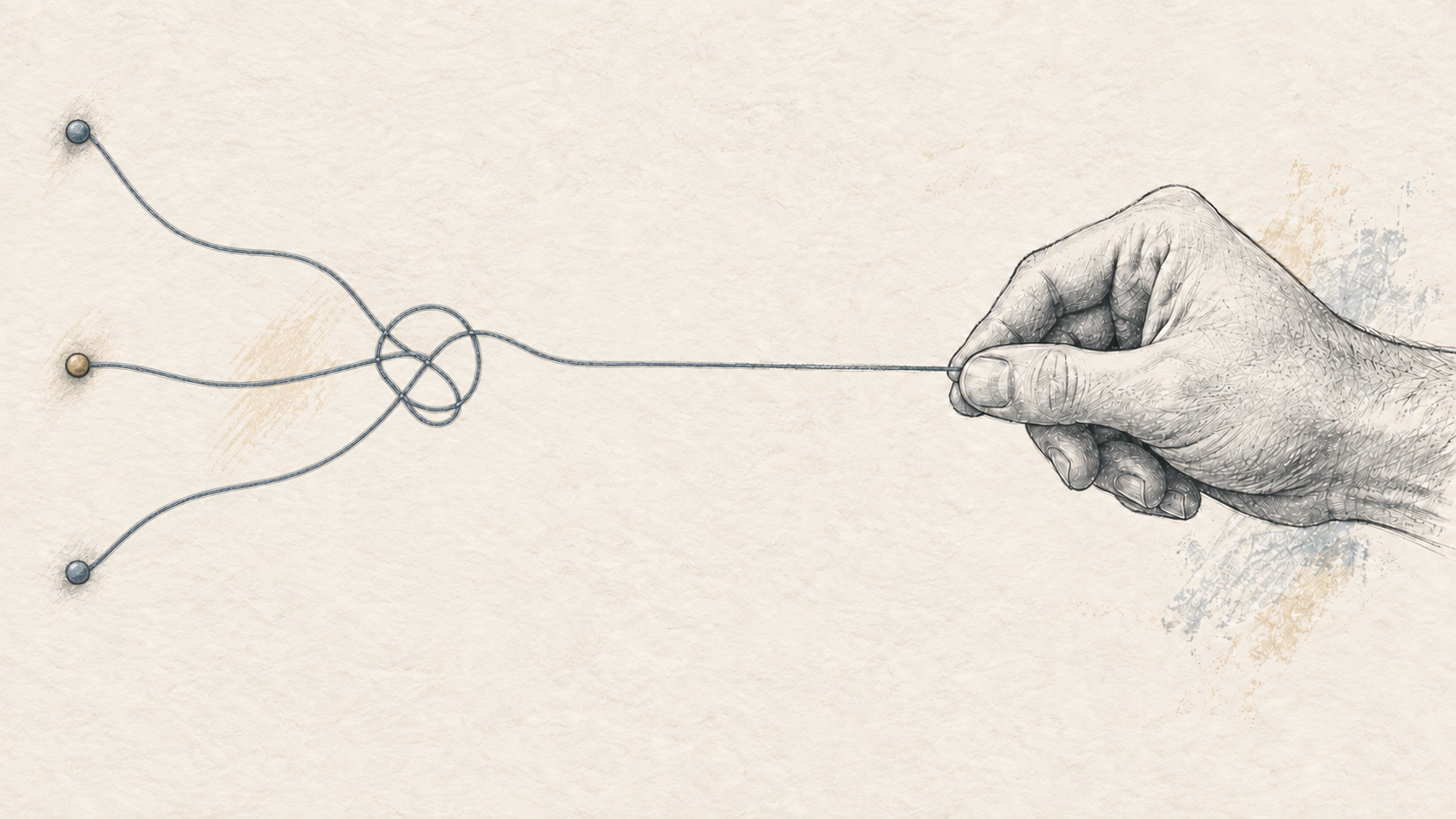
What problem are we trying to solve?
Hard situations have a funny habit of showing up disguised as answers.
Paint the wall gray. Buy the platform. Add the process. Fix the communication.
Before we start moving furniture, we need to know what we are trying to make happen.
Then we can figure out what blocks it, what matters now, and the Best Next Step.
Sometimes the problem that leaves the room is not the problem that came in.
And whatever we figure out has to work somewhere I am not — something you can explain, test, decide on, or carry into the next room.
Then we move.
The way we work adapts to the situation.
Sometimes the right move is a bounded piece of work. Sometimes the situation calls for a few proven pieces composed around it. And sometimes the outside read needs to stay close as things change.
You do not need to know which one fits before we talk.
Start small. Move fast.
Bounded ways to get moving.
Defined scope. Defined price. Each one gives us a real way to start.
Reveal
Make it visible.
Too much is in play, and we need enough of the situation visible to see what matters.
First Cut
Forge clarity.
One important thing sits in front of us, and we need it clear enough to act.
Reality Check
Pressure-test the path.
A path exists, and we need to know it holds before we put more behind it.
Each gives us a bounded way to start; neither Reveal nor First Cut is a required step toward Custom. Reality Check comes after First Cut, when the path it produced still needs pressure-testing.
When the situation needs a different shape
Custom does not mean bigger.
It means composed.
Not every situation fits a bounded starting move.
Sometimes more than one perspective matters. Sometimes a team needs to work through it together. Sometimes the work crosses several practices, or the organization changes what shape will work.
We start with the situation, use the pieces that fit, and build the smallest useful shape around what needs to happen.
This is not blank-page consulting. The practices and working moves already exist. We compose them around the work in front of us.
Using the free Value Delivery Check with your team does not require a Custom engagement.
Bring me what’s on your plate.
You do not need to know which way of working fits before we talk.
We will spend about 25 minutes on the situation and what a Best Next Step could be. Then we figure out whether I belong in whatever comes next.
You bring the situation as it is.
We put it on the table together. Sometimes one question removes something that seemed important.
We find what a Best Next Step could be — sometimes confirming what already looks right.
It’s a dialogue, not a pitch.
Not ready to talk yet? Start here.
There is a free check you can run on your own, today, without talking to anyone.
Value Delivery Check
Get the situation out of your head and on paper.
Figure out your Best Next Step.
And if we talk later, that gives us something concrete to work from.
Explore the Value Delivery Check
Five questions. Three quick passes. One Best Next Step.
About 25 minutes. Free, and the conversation is separate.
Already ran it?
Bring it.
It gives us a better place to start than the whole situation in your head.
We can look at the evidence you captured, what you learned from the outside read, and what remains uncertain. Bring your Best Next Step if you found a small action you own that unlocks progress. If no owned move is available yet, that is a valid result to bring too.
You do not need to run it before we talk.
Some people want to know if there is a way to work with me on an ongoing basis.
There is. We call it Consiglio.
It is a limited, invitation-only relationship built around trusted counsel and an outside read that stays close over time.
As context accumulates, less of each conversation needs to go toward rebuilding the backstory. You have access to an outside read that knows more of the situation as it changes.
It remains one perspective for your judgment, not a standing delivery team.