
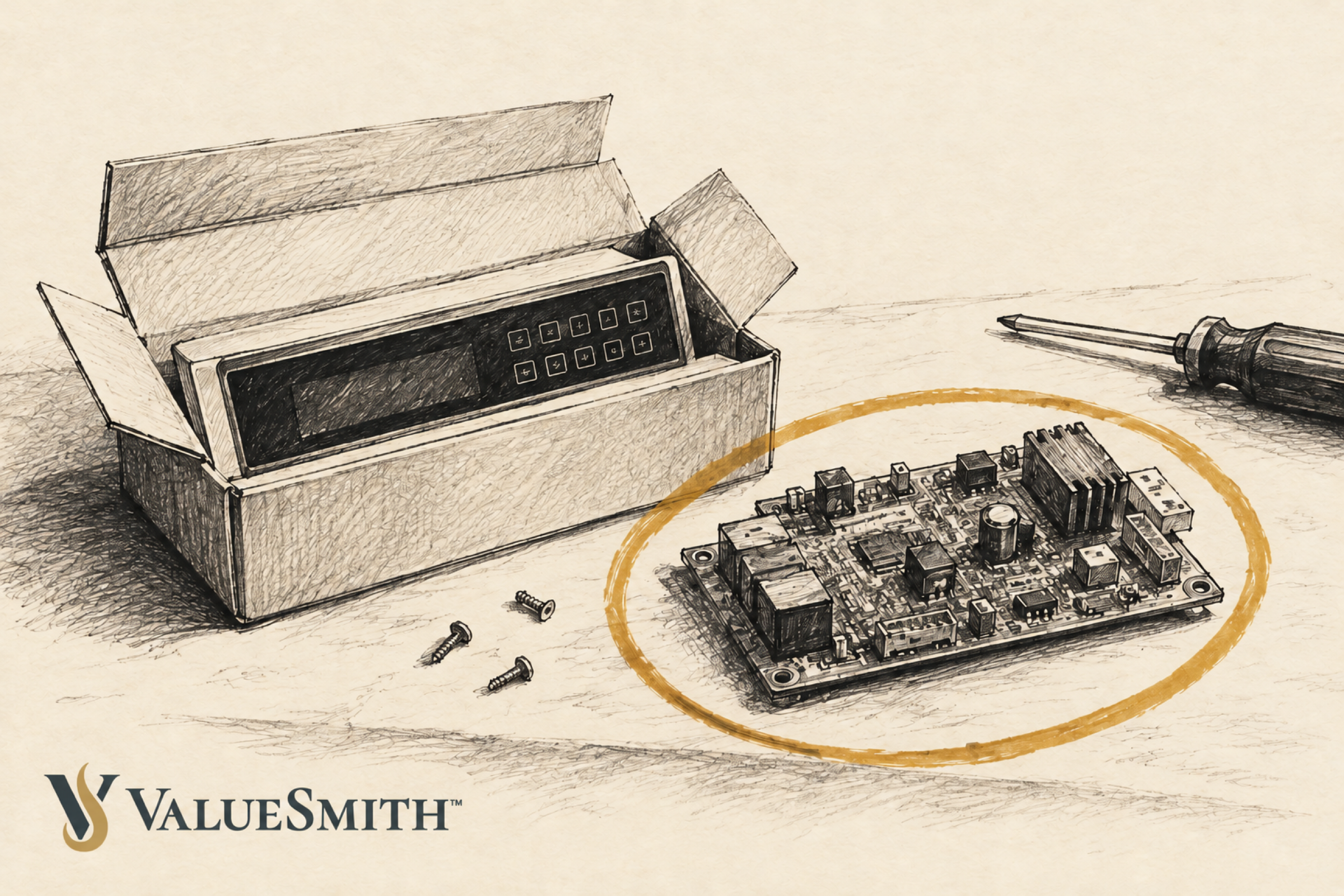
Recently, a technician came to the house to repair the microwave.
He needed an extra set of hands, so I offered to help. We got talking about craft, pride in our work, figuring things out, and even AI. After the repair, we kept talking for another 90 minutes.
He shared a story about a customer whose refrigerator wasn’t cooling.
Over the phone, he asked a series of questions and suspected a faulty circuit board. The part was in short supply, but he’d found one for about $400.
As he recalled it, the customer said something like:
“I asked [a chatbot] to diagnose it, and it suggests the problem is likely the display panel. I can order one online.”
He said he’d tried to explain why he didn’t think the display panel was the problem. The panel connected back through the circuit board, and the symptoms didn’t fit that kind of failure. He still suspected the board.
But the customer was convinced the chatbot’s answer made more sense, and it was cheaper. So they told the technician not to order the circuit board because they were going to get the replacement panel.
When it arrived, they asked my new friend to install the panel.
He did.
It didn’t fix the problem. He wasn’t surprised.
With the refrigerator in front of him, he confirmed the circuit board failure. Except now he couldn’t find a replacement.
I asked him what that meant for the repair, and he shook his head and said he wasn’t sure yet.
I don’t know if or how that situation resolved.
What stayed with me wasn’t that the technician turned out to be right. It was how he got there.
He knew what questions to ask, how to assess the answers, and what he needed to check.
The customer had an answer. The technician knew how to find out whether it was right.